We use cookies to make your experience better. To comply with the new e-Privacy directive, we need to ask for your consent to set the cookies. Learn more.

Cell Signaling Pan-Actin Antibody
List Price
$309.06
Your Price
$309.06
Cell Signaling Pan-Actin Antibody - CSIG (Additional S&H or Hazmat Fees May Apply)
NETA PART:
CSIG-4968S
MFG.PART:
4968S
UNSPSC:
12352203
Manufacturer:
Cell Signaling


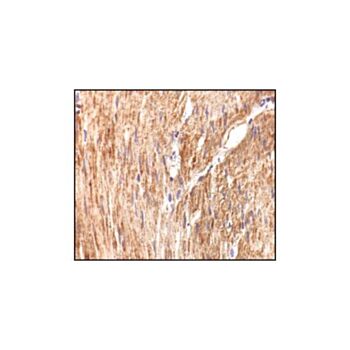
| Size | 100 µl |
| Reactivity | H M R Mk Z |
| Sensitivity | Endogenous |
| Molecular Weight (kDa) | 45 |
| Source/Isotype | Rabbit |
| Application/Dilution | {Western Blotting: 1:1000, Immunohistochemistry (Paraffin): 1:50 - 1:200} |
| Storage | Supplied in 10 mM sodium HEPES (pH 7.5), 150 mM NaCl, 100 µg/ml BSA and 50% glycerol. Store at –20°C. Do not aliquot the antibody. |
| Specificity/Sensitivity | Pan-Actin Antibody detects endogenous levels of total actin (all isoforms). The antibody also detects the 30 kDa actin fragment cleaved at glutamate 107. |
| Species Reactivity | Human, Mouse, Rat, Monkey, Zebrafish |
| Source/Purification | Polyclonal antibodies are produced by immunizing animals with a synthetic peptide corresponding to residues surrounding Asp244 of human beta-actin. Antibodies are purified by protein A and peptide affinity chromatography. |
| Background | Actin, a ubiquitous eukaryotic protein, is the major component of the cytoskeleton. At least six isoforms are known in mammals. Nonmuscle β- and γ-actin, also known as cytoplasmic actin, are ubiquitously expressed, controlling cell structure and motility (1). While all actin isoforms are highly homologous, cytoplasmic β- and γ-actin protein sequences differ by only four biochemically similar amino acids (2). For this reason, antibodies raised to β-actin may cross-react with γ-actin, and vice versa. α-cardiac and α-skeletal actin are expressed in striated cardiac and skeletal muscles, respectively; two smooth muscle actins, α- and γ-actin, are found primarily in vascular smooth muscle and enteric smooth muscle, respectively. These actin isoforms regulate the contractile potential of muscle cells (1). Actin exists mainly as a fibrous polymer, F-actin. In response to cytoskeletal reorganizing signals during processes such as cytokinesis, endocytosis, or stress, cofilin promotes fragmentation and depolymerization of F-actin, resulting in an increase in the monomeric globular form, G-actin (3). The ARP2/3 complex stabilizes F-actin fragments and promotes formation of new actin filaments (3). Research studies have shown that actin is hyperphosphorylated in primary breast tumors (4). Cleavage of actin under apoptotic conditions has been observed in vitro and in cardiac and skeletal muscle, as shown in research studies (5-7). Actin cleavage by caspase-3 may accelerate ubiquitin/proteasome-dependent muscle proteolysis (7). |
| SKU | CSIG-4968S |
|---|---|
| Featured | No |
| Supplier Part Number | 4968S |
| UM | EA |
| UNSPSC | 12352203 |
| Manufacturer | Cell Signaling |
| MSDS URL | Click here |
| Temperature | -20C |
| CountryOfOrigin | United States |
| ProductLine | CSIG |
| Qty | 1 |
| MinOrderQty | 1 |
| Weight | 7.000000 |
| Lead Time | 5 |
| Hazardous | N |
| ACT Ecolabel | No |