We use cookies to make your experience better. To comply with the new e-Privacy directive, we need to ask for your consent to set the cookies. Learn more.

Cell Signaling Akt Antibody
List Price
$320.17
Your Price
$320.17
Cell Signaling Akt Antibody - CSIG (Additional S&H or Hazmat Fees May Apply)
NETA PART:
CSIG-9272S
MFG.PART:
9272S
UNSPSC:
12352203
Manufacturer:
Cell Signaling


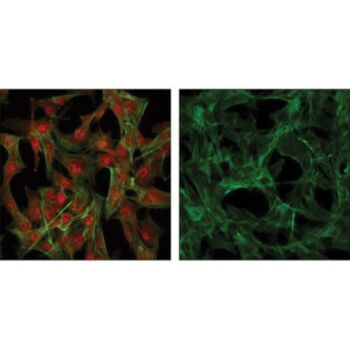
| Size | 100 µl |
| Reactivity | H M R Hm Mk C Dm B Dg Pg GP |
| Sensitivity | Endogenous |
| Molecular Weight (kDa) | 60 |
| Source/Isotype | Rabbit |
| Application/Dilution | {Western Blotting: 1:1000, Immunoprecipitation: 1:50, Immunofluorescence (Immunocytochemistry): 1:200, Flow Cytometry (Fixed/Permeabilized): 1:50 - 1:200} |
| Storage | Supplied in 10 mm sodium HEPES (pH 7.5), 150 mm NaCl, 100 µg/mL BSA and 50% glycerol. Store at –20°C. Do not aliquot the antibody. |
| Specificity/Sensitivity | Akt Antibody detects endogenous levels of total Akt1, Akt2 and Akt3 proteins. The antibody does not cross-react with related kinases. |
| Species Reactivity | Human, Mouse, Rat, Hamster, Monkey, Chicken, D. melanogaster, Bovine, Dog, Pig, Guinea Pig |
| Source/Purification | Polyclonal antibodies are produced by immunizing animals with a synthetic peptide corresponding to the carboxy-terminal sequence of mouse Akt. Antibodies are purified by protein A and peptide affinity chromatography. |
| Background | Akt, also referred to as PKB or Rac, plays a critical role in controlling survival and apoptosis (1-3). This protein kinase is activated by insulin and various growth and survival factors to function in a wortmannin-sensitive pathway involving PI3 kinase (2,3). Akt is activated by phospholipid binding and activation loop phosphorylation at Thr308 by PDK1 (4) and by phosphorylation within the carboxy terminus at Ser473. The previously elusive PDK2 responsible for phosphorylation of Akt at Ser473 has been identified as mammalian target of rapamycin (mTOR) in a rapamycin-insensitive complex with rictor and Sin1 (5,6). Akt promotes cell survival by inhibiting apoptosis through phosphorylation and inactivation of several targets, including Bad (7), forkhead transcription factors (8), c-Raf (9), and caspase-9. PTEN phosphatase is a major negative regulator of the PI3K/Akt signaling pathway (10). LY294002 is a specific PI3 kinase inhibitor (11). Another essential Akt function is the regulation of glycogen synthesis through phosphorylation and inactivation of GSK-3α and β (12,13). Akt may also play a role in insulin stimulation of glucose transport (12). In addition to its role in survival and glycogen synthesis, Akt is involved in cell cycle regulation by preventing GSK-3β-mediated phosphorylation and degradation of cyclin D1 (14) and by negatively regulating the cyclin-dependent kinase inhibitors p27 Kip1 (15) and p21 Waf1/Cip1 (16). Akt also plays a critical role in cell growth by directly phosphorylating mTOR in a rapamycin-sensitive complex containing raptor (17). More importantly, Akt phosphorylates and inactivates tuberin (TSC2), an inhibitor of mTOR within the mTOR-raptor complex (18,19). |
| SKU | CSIG-9272S |
|---|---|
| Supplier Part Number | 9272S |
| UM | EA |
| UNSPSC | 12352203 |
| Manufacturer | Cell Signaling |
| MSDS URL | Click here |
| Temperature | -20C |
| CountryOfOrigin | United States |
| ProductLine | CSIG |
| Qty | 1 |
| MinOrderQty | 1 |
| Weight | 7.000000 |
| Lead Time | 5 |
| Hazardous | N |
| Energy Star | No |
| Green | No |
| Controlled | N |