We use cookies to make your experience better. To comply with the new e-Privacy directive, we need to ask for your consent to set the cookies. Learn about our cookie policy.

Cell Signaling Syndecan 1 (D4y7h) Rabbit mAb
List Price $354.51 Your Price $354.51
Cell Signaling Syndecan 1 (D4y7h) Rabbit mAb - CSIG (Additional S&H or Hazmat Fees May Apply)
NETA PART: CSIG-12922S
MFG.PART: 12922S
UNSPSC: 12352203
Manufacturer: Cell Signaling


| Size | 100 µl |
| Reactivity | H |
| Sensitivity | Endogenous |
| Molecular Weight (kDa) | 180-250 |
| Source/Isotype | Rabbit IgG |
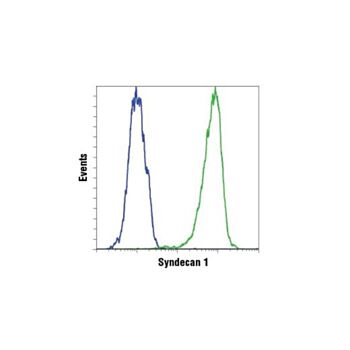
| Application/Dilution | {Western Blotting: 1:1000, Immunoprecipitation: 1:50, Flow Cytometry (Fixed/Permeabilized): 1:200 - 1:800} |
| Storage | Supplied in 10 mm sodium HEPES (pH 7.5), 150 mm NaCl, 100 µg/mL BSA, 50% glycerol and less than 0.02% sodium azide. Store at –20°C. Do not aliquot the antibody. |
| Specificity/Sensitivity | Syndecan 1 (D4Y7H) Rabbit mAb recognizes endogenous levels of multimeric form of syndecan 1 protein. This antibody cross-reacts with proteins of unknown origin between 46-60 kDa in some cell lines. |
| Species Reactivity | Human |
| Source/Purification | Monoclonal antibody is produced by immunizing animals with a synthetic peptide corresponding to residues surrounding Ala294 of human syndecan 1 protein. |
| Background | Syndecans are a family of type 1 transmembrane heparan sulphate proteoglycans comprising four members in mammals (SDC-1 to -4) (1) encoded by four syndecan genes. Syndecans are involved in embryonic development, tumorigenesis, and angiogenesis (2). The extracellular domain harbors attachment sites for heparan sulfate and chondroitin sulfate chains, facilitating interaction with an array of proteins including a plethora of growth factors. In addition, the hydrophobic C-terminal intracellular domain can interact with proteins containing a PDZ domain (2). These interactions place syndecans as important integrators of membrane signaling (3). Syndecans undergo proteolytic cleavage causing the release of their extracellular domain (shedding), converting the membrane-bound proteins into soluble molecular effectors (4).Syndecan 1 (SDC1) is a specific marker for plasmacytic differentiation in hematologic disorders (5-7). This cell surface proteoglycan is also expressed in normal epithelial cells and tissues as well as various types of cancer tissues (8-11). The extracellular shed form of syndecan 1 remains soluble or accumulates in the extracellular matrix where it binds growth factors, cytokines and other extracellular matrix proteins (12,13). This binding activates signaling of bound growth factors or cytokines, which results in enhanced tumor growth, dissemination, angiogenesis, and osteolysis (14-17). As a result, the level of syndecan1 protein and its shed form may serve as prognostic factors for a list of malignancies (6,18,19). |
| SKU | CSIG-12922S |
|---|---|
| Supplier Part Number | 12922S |
| UM | EA |
| UNSPSC | 12352203 |
| Manufacturer | Cell Signaling |
| MSDS URL | Click here |
| Temperature | -20C |
| CountryOfOrigin | United States |
| ProductLine | CSIG |
| Qty | 1 |
| MinOrderQty | 1 |
| Weight | 7.000000 |
| Lead Time | 5 |
| Hazardous | N |
| Energy Star | No |
| Green | No |
| Controlled | N |