We use cookies to make your experience better. To comply with the new e-Privacy directive, we need to ask for your consent to set the cookies. Learn more.

Cell Signaling Lsr (D3e3n) Xp Rabbit mAb
List Price
$173.72
Your Price
$173.72
Cell Signaling Lsr (D3e3n) Xp Rabbit mAb - CSIG (Additional S&H or Hazmat Fees May Apply)
NETA PART:
CSIG-14804T
MFG.PART:
14804T
UNSPSC:
12352203
Manufacturer:
Cell Signaling


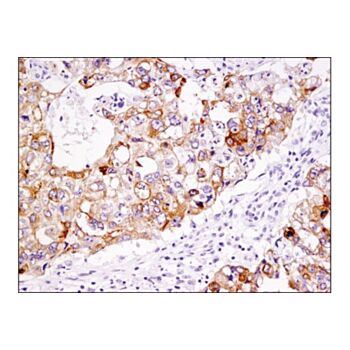
| Size | 20 µl |
| Reactivity | H Mk |
| Sensitivity | Endogenous |
| Molecular Weight (kDa) | 65 |
| Source/Isotype | Rabbit IgG |
| Application/Dilution | {Western Blotting: 1:1000, Immunoprecipitation: 1:50, Immunohistochemistry (Paraffin): 1:400} |
| Storage | Supplied in 10 mM sodium HEPES (pH 7.5), 150 mM NaCl, 100 µg/ml BSA, 50% glycerol and less than 0.02% sodium azide. Store at –20°C. Do not aliquot the antibody. |
| Specificity/Sensitivity | LSR (D3E3N) XP® Rabbit mAb recognizes endogenous levels of total LSR protein. |
| Species Reactivity | Human, Monkey |
| Source/Purification | Monoclonal antibody is produced by immunizing animals with a synthetic peptide corresponding to residues surrounding Gly449 of human LSR protein. |
| Background | The lipolysis-stimulated lipoprotein receptor (LSR, LISCH) is an immunoglobulin superfamily member and single pass transmembrane protein that binds the apolipoprotein B (ApoB) and apolipoprotein E (ApoE) lipoproteins (1). LSR is responsible for the cellular uptake of triacylglyceride-rich lipoproteins and supports lipid distribution between the liver and peripheral tissues (1,2). The LSR protein is expressed at the cell membrane as a heterodimer consisting of α and β subunits, which are produced as alternative splice variants from a single gene (3). Research studies suggest that LSR acts as the host cell surface receptor for multiple Clostridium toxins (4) and participates in the formation of tricellular tight junctions in epithelial cells (5). Additional studies demonstrate that LSR expression is up-regulated in several cancer types, including breast, bladder, and colorectal cancer, which could lead to pro-tumorigenic changes in metabolism (6-8). |
| SKU | CSIG-14804T |
|---|---|
| Featured | No |
| Supplier Part Number | 14804T |
| UM | EA |
| UNSPSC | 12352203 |
| Manufacturer | Cell Signaling |
| MSDS URL | Click here |
| Temperature | -20C |
| CountryOfOrigin | United States |
| ProductLine | CSIG |
| Qty | 1 |
| MinOrderQty | 1 |
| Weight | 7.000000 |
| Lead Time | 5 |
| Hazardous | N |
| ACT Ecolabel | No |