We use cookies to make your experience better. To comply with the new e-Privacy directive, we need to ask for your consent to set the cookies. Learn about our cookie policy.

Cell Signaling Car (D3w3g) Rabbit mAb
List Price
$354.51
Your Price
$354.51
Cell Signaling Car (D3w3g) Rabbit mAb - CSIG (Additional S&H or Hazmat Fees May Apply)
NETA PART:
CSIG-16984S
MFG.PART:
16984S
UNSPSC:
12352203
Manufacturer:
Cell Signaling


| Size | 100 µl |
| Reactivity | H |
| Sensitivity | Endogenous |
| Molecular Weight (kDa) | 45-55 |
| Source/Isotype | Rabbit IgG |
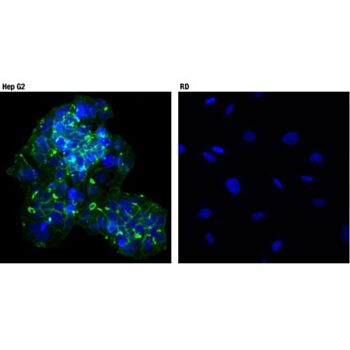
| Application/Dilution | {Western Blotting: 1:1000, Immunoprecipitation: 1:100, Immunohistochemistry (Paraffin): 1:500, Immunofluorescence (Immunocytochemistry): 1:200} |
| Storage | Supplied in 10 mm sodium HEPES (pH 7.5), 150 mm NaCl, 100 µg/mL BSA, 50% glycerol and less than 0.02% sodium azide. Store at –20°C. Do not aliquot the antibody. |
| Specificity/Sensitivity | CAR (D3W3G) Rabbit mAb recognizes endogenous levels of total CAR protein. |
| Species Reactivity | Human |
| Source/Purification | Monoclonal antibody is produced by immunizing animals with a synthetic peptide corresponding to residues surrounding Arg328 of human CAR protein. |
| Background | The coxsackie virus and adenovirus receptor (CXADR, CAR) is a highly conserved, single-transmembrane glycoprotein and the primary receptor to mediate cellular attachment and infection of coxsackie B viruses and most adenoviruses (1,2). The CAR protein contains a pair of Ig-like domains within the amino-terminal extracellular domain and a carboxyl-terminal PDZ motif (1). Research studies indicate that CAR is a tight junction protein that associates with the ZO-1 scaffold protein and promotes both cell adhesion and restriction of solute and ion movement between cells (2). Endogenous CAR is targeted to the basolateral plasma membrane by a tyrosine-based basolateral sorting signal and clathrin adaptors AP-1A and AP-1B (3). CAR binds junctional adhesion molecule L (JAML) on epithelial cells and neutrophils where it activates PI3K and downstream MAPK kinases to stimulate epithelial γδ T cell proliferation and increase production of TNFα and keratinocyte growth factor (4-6). As a result, the CAR protein plays a potentially critical role in adenoviral gene therapy, immunity, wound repair, inflammation, and cancer therapy (4-6). Additional studies demonstrate that CAR is essential in regulating squamous carcinoma cell growth (7). |
| SKU | CSIG-16984S |
|---|---|
| Supplier Part Number | 16984S |
| UM | EA |
| UNSPSC | 12352203 |
| Manufacturer | Cell Signaling |
| MSDS URL | Click here |
| Temperature | -20C |
| CountryOfOrigin | United States |
| ProductLine | CSIG |
| Qty | 1 |
| MinOrderQty | 1 |
| Weight | 7.000000 |
| Lead Time | 5 |
| Hazardous | N |
| Energy Star | No |
| Green | No |
| Controlled | N |