We use cookies to make your experience better. To comply with the new e-Privacy directive, we need to ask for your consent to set the cookies. Learn about our cookie policy.

Cell Signaling 5-Methylcytosine (5-Mc) (D3s2z) Rabbit mAb
List Price
$152.51
Your Price
$152.51
Cell Signaling 5-Methylcytosine (5-Mc) (D3s2z) Rabbit mAb - CSIG (Additional S&H or Hazmat Fees May Apply)
NETA PART:
CSIG-28692S
MFG.PART:
28692S
UNSPSC:
12352203
Manufacturer:
Cell Signaling


| Size | 100 µl |
| Reactivity | All |
| Sensitivity | Endogenous |
| Source/Isotype | Rabbit IgG |
| Application/Dilution | {Immunofluorescence (Immunocytochemistry): 1:1600, DNA DOT Blot: 1:1000} |
| Storage | Supplied in 10 mm sodium HEPES (pH 7.5), 150 mm NaCl, 100 µg/mL BSA, 50% glycerol and less than 0.02% sodium azide. Store at –20°C. Do not aliquot the antibody. |
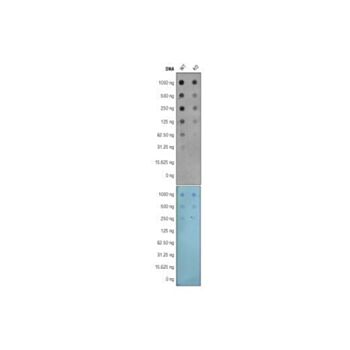
| Specificity/Sensitivity | 5-Methylcytosine (5-mC) (D3S2Z) Rabbit mAb recognizes endogenous levels of 5-methylcytosine. This antibody has been validated using ELISA, DOT blot, and MeDIP assays and shows high specificity for 5-methylcytosine. |
| Species Reactivity | All Species Expected |
| Source/Purification | Monoclonal antibody is produced by immunizing animals with 5-methylcytidine. |
| Background | Methylation of DNA at cytosine residues is a heritable, epigenetic modification that is critical for proper regulation of gene expression, genomic imprinting, and mammalian development (1,2). 5-methylcytosine is a repressive epigenetic mark established de novo by two enzymes, DNMT3a and DNMT3b, and is maintained by DNMT1 (3, 4). 5-methylcytosine was originally thought to be passively depleted during DNA replication. However, subsequent studies have shown that Ten-Eleven Translocation (TET) proteins TET1, TET2, and TET3 can catalyze the oxidation of methylated cytosine to 5-hydroxymethylcytosine (5-hmC) (5). Additionally, TET proteins can further oxidize 5-hmC to form 5-formylcytosine (5-fC) and 5-carboxylcytosine (5-caC), both of which are excised by thymine-DNA glycosylase (TDG), effectively linking cytosine oxidation to the base excision repair pathway and supporting active cytosine demethylation (6,7).Normally DNA methylation occurs in a bimodal fashion, such that CpG dinucleotides are largely methylated across the genome, except in short stretches of CpG-rich sequences associated with gene promoters, known as CpG-islands, where methylation is virtually absent (8). Cancer cell genomes often undergo global hypomethylation, while CpG-islands become hypermethylated, causing their associated promoters to become repressed (9). There is evidence that a number of aberrantly hypermethylated CpG-islands found in carcinomas occur at tumor suppressor genes such as RB1, MLH1, and BRCA1 (10). |
| SKU | CSIG-28692S |
|---|---|
| Supplier Part Number | 28692S |
| UM | EA |
| UNSPSC | 12352203 |
| Manufacturer | Cell Signaling |
| MSDS URL | Click here |
| Temperature | -20C |
| CountryOfOrigin | United States |
| ProductLine | CSIG |
| Qty | 1 |
| MinOrderQty | 1 |
| Weight | 7.000000 |
| Lead Time | 5 |
| Hazardous | N |
| Energy Star | No |
| Green | No |
| Controlled | N |