We use cookies to make your experience better. To comply with the new e-Privacy directive, we need to ask for your consent to set the cookies. Learn about our cookie policy.

Cell Signaling Aif (D39d2) Xp Rabbit mAb
List Price $160.59 Your Price $160.59
Cell Signaling Aif (D39d2) Xp Rabbit mAb - CSIG (Additional S&H or Hazmat Fees May Apply)
NETA PART: CSIG-5318T
MFG.PART: 5318T
UNSPSC: 12352203
Manufacturer: Cell Signaling


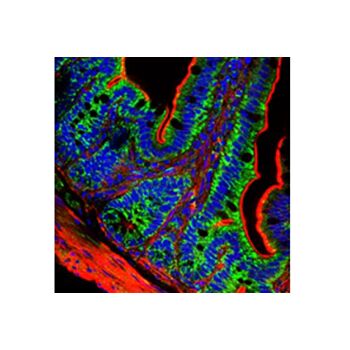
| Size | 20 µl |
| Reactivity | H M R Mk |
| Sensitivity | Endogenous |
| Molecular Weight (kDa) | 67 |
| Source/Isotype | Rabbit IgG |
| Application/Dilution | {Western Blotting: 1:1000, Immunoprecipitation: 1:100, Immunofluorescence (Frozen): 1:400, Immunofluorescence (Immunocytochemistry): 1:400} |
| Storage | Supplied in 10 mm sodium HEPES (pH 7.5), 150 mm NaCl, 100 µg/mL BSA, 50% glycerol and less than 0.02% sodium azide. Store at –20°C. Do not aliquot the antibody.For a carrier free (BSA and azide free) version of this product see product #62147. |
| Specificity/Sensitivity | AIF (D39D2) XP® Rabbit mAb detects endogenous levels of total AIF protein. |
| Species Reactivity | Human, Mouse, Rat, Monkey |
| Source/Purification | Monoclonal antibody was produced by immunizing animals with a synthetic peptide corresponding to residues surrounding Ala520 of human AIF protein. |
| Background | Apoptosis-inducing factor (AIF, PDCD8) is a ubiquitously expressed flavoprotein that plays a critical role in caspase-independent apoptosis (reviewed in 1,2). AIF is normally localized to the mitochondrial intermembrane space and released in response to apoptotic stimuli (3). Treatment of isolated nuclei with recombinant AIF leads to early apoptotic events, such as chromatin condensation and large-scale DNA fragmentation (3). Studies of AIF knockout mice have shown that the apoptotic activity of AIF is cell type and stimuli-dependent. Also noted was that AIF was required for embryoid body cavitation, representing the first wave of programmed cell death during embryonic morphogenesis (4). Structural analysis of AIF revealed two important regions, the first having oxidoreductase activity and the second being a potential DNA binding domain (3,5). While AIF is redox-active and can behave as an NADH oxidase, this activity is not required for inducing apoptosis (6). Instead, recent studies suggest that AIF has dual functions, a pro-apoptotic activity in the nucleus via its DNA binding and an anti-apoptotic activity via the scavenging of free radicals through its oxidoreductase activity (2,7). |
| SKU | CSIG-5318T |
|---|---|
| Supplier Part Number | 5318T |
| UM | EA |
| UNSPSC | 12352203 |
| Manufacturer | Cell Signaling |
| MSDS URL | Click here |
| Temperature | -20C |
| CountryOfOrigin | United States |
| ProductLine | CSIG |
| Qty | 1 |
| MinOrderQty | 1 |
| Weight | 7.000000 |
| Lead Time | 5 |
| Hazardous | N |
| Energy Star | No |
| Green | No |
| Controlled | N |