We use cookies to make your experience better. To comply with the new e-Privacy directive, we need to ask for your consent to set the cookies. Learn about our cookie policy.

Cell Signaling Tim-3 (D3m9r) Xp Rabbit mAb (Mouse Specific)
List Price $162.61 Your Price $162.61
Cell Signaling Tim-3 (D3m9r) Xp Rabbit mAb (Mouse Specific) - CSIG (Additional S&H or Hazmat Fees May Apply)
NETA PART: CSIG-83882T
MFG.PART: 83882T
UNSPSC: 12352203
Manufacturer: Cell Signaling


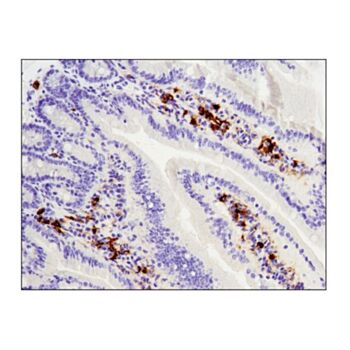
| Size | 20 µl |
| Reactivity | M |
| Sensitivity | Endogenous |
| Molecular Weight (kDa) | 45-80 |
| Source/Isotype | Rabbit IgG |
| Application/Dilution | {Western Blotting: 1:1000, Immunoprecipitation: 1:100, IHC Leica Bond: 1:800, Immunohistochemistry (Paraffin): 1:200} |
| Storage | Supplied in 10 mm sodium HEPES (pH 7.5), 150 mm NaCl, 100 µg/mL BSA, 50% glycerol and less than 0.02% sodium azide. Store at –20°C. Do not aliquot the antibody.For a carrier free (BSA and azide free) version of this product see product #72911. |
| Specificity/Sensitivity | TIM-3 (D3M9R) XP® Rabbit mAb recognizes endogenous levels of total TIM-3 protein. |
| Species Reactivity | Mouse |
| Source/Purification | Monoclonal antibody is produced by immunizing animals with a synthetic peptide corresponding to residues surrounding Pro137 of mouse TIM-3 protein. |
| Background | T cell Ig- and mucin-domain-containing molecules (TIMs) are a family of transmembrane proteins expressed by various immune cells. TIM-3 is an inhibitory molecule that is induced following T cell activation (1-3 ). TIM-3 is expressed by exhausted T cells in the settings of chronic infection and cancer (4,5), and tumor-infiltrating T cells that coexpress PD-1 and TIM-3 exhibit the most severe exhausted phenotype (5). Tumor-infiltrating dendritic cells (DCs) also express TIM-3. TIM-3 expression on DCs was found to suppress innate immunity by reducing the immunogenicity of nucleic acids released by dying tumor cells (6). Research studies show that heterodimerization of TIM-3 with CEACAM-1 is critical for the inhibitory function of TIM-3, and co-blockade of TIM-3 and CEACAM-1 enhanced anti-tumor responses in a mouse model of colorectal cancer (7). In addition, blockade of TIM-3 in mouse models of autoimmunity enhanced the severity of disease (1). Finally, binding of Galectin-9 to TIM-3 expressed by Th1 cells induces T cell death (8). |
| SKU | CSIG-83882T |
|---|---|
| Supplier Part Number | 83882T |
| UM | EA |
| UNSPSC | 12352203 |
| Manufacturer | Cell Signaling |
| MSDS URL | Click here |
| Temperature | -20C |
| CountryOfOrigin | United States |
| ProductLine | CSIG |
| Qty | 1 |
| MinOrderQty | 1 |
| Weight | 7.000000 |
| Lead Time | 5 |
| Hazardous | N |
| Energy Star | No |
| Green | No |
| Controlled | N |