We use cookies to make your experience better. To comply with the new e-Privacy directive, we need to ask for your consent to set the cookies. Learn about our cookie policy.

Cell Signaling Pias3 (D5f9) Xp Rabbit mAb
List Price $162.61 Your Price $162.61
Cell Signaling Pias3 (D5f9) Xp Rabbit mAb - CSIG (Additional S&H or Hazmat Fees May Apply)
NETA PART: CSIG-9042T
MFG.PART: 9042T
UNSPSC: 12352203
Manufacturer: Cell Signaling


| Size | 20 µl |
| Reactivity | H |
| Sensitivity | Endogenous |
| Molecular Weight (kDa) | 65-75 |
| Source/Isotype | Rabbit IgG |
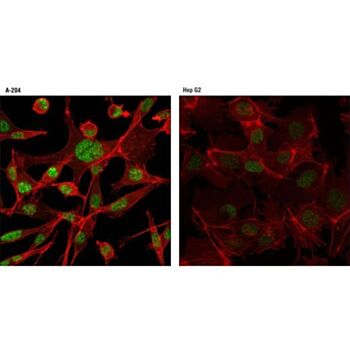
| Application/Dilution | {Western Blotting: 1:1000, Immunoprecipitation: 1:100, Immunofluorescence (Immunocytochemistry): 1:200} |
| Storage | Supplied in 10 mm sodium HEPES (pH 7.5), 150 mm NaCl, 100 µg/mL BSA, 50% glycerol and less than 0.02% sodium azide. Store at –20°C. Do not aliquot the antibody. |
| Specificity/Sensitivity | PIAS3 (D5F9) XP® Rabbit mAb recognizes endogenous levels of total PIAS3 protein. |
| Species Reactivity | Human |
| Source/Purification | Monoclonal antibody is produced by immunizing animals with a synthetic peptide corresponding to residues surrounding Pro590 of human PIAS3 protein. |
| Background | The protein inhibitor of activated Stat (PIAS) proteins, which include PIAS1, PIAS3, PIASx, and PIASy, were originally characterized based on their interaction with the Stat family of transcription factors (1,2). PIAS1, PIAS3, and PIASx interact with and repress Stat1, Stat3, and Stat4, respectively (1-3). Deletion of PIAS1 leads to inhibition of interferon-inducible genes and increased protection against infection (4). The PIAS family contains a conserved RING domain that has been linked to a function as a small ubiquitin-related modifier (SUMO) ligase, coupling the SUMO conjugating enzyme Ubc9 with its substrate proteins (5,6). Numerous studies have now shown that PIAS family members can regulate the activity of transcription factors through distinct mechanisms, including NF-κB (7,8), c-Jun, p53 (5,9), Oct-4 (10), and Smads (11,12). The activity of PIAS1 is regulated by both phosphorylation and arginine methylation. Inflammatory stimuli can induce IKK-mediated phosphorylation of PIAS1 at Ser90, which is required for its activity (13). In addition, PRMT1 induces arginine methylation of PIAS1 at Arg303 following interferon treatment and is associated with its repressive activity on Stat1 (14). |
| SKU | CSIG-9042T |
|---|---|
| Supplier Part Number | 9042T |
| UM | EA |
| UNSPSC | 12352203 |
| Manufacturer | Cell Signaling |
| MSDS URL | Click here |
| Temperature | -20C |
| CountryOfOrigin | United States |
| ProductLine | CSIG |
| Qty | 1 |
| MinOrderQty | 1 |
| Weight | 7.000000 |
| Lead Time | 5 |
| Hazardous | N |
| Energy Star | No |
| Green | No |
| Controlled | N |