We use cookies to make your experience better. To comply with the new e-Privacy directive, we need to ask for your consent to set the cookies. Learn more.

Cell Signaling Id3 (D16d10) Rabbit mAb
List Price
$342.39
Your Price
$342.39
Cell Signaling Id3 (D16d10) Rabbit mAb - CSIG (Additional S&H or Hazmat Fees May Apply)
NETA PART:
CSIG-9837S
MFG.PART:
9837S
UNSPSC:
12352203
Manufacturer:
Cell Signaling


| Size | 100 µl |
| Reactivity | H |
| Sensitivity | Endogenous |
| Molecular Weight (kDa) | 13 |
| Source/Isotype | Rabbit IgG |
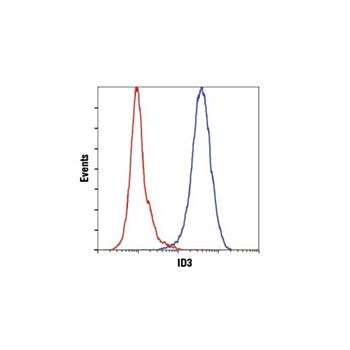
| Application/Dilution | {Western Blotting: 1:1000, Immunoprecipitation: 1:200, Immunofluorescence (Immunocytochemistry): 1:800, Flow Cytometry (Fixed/Permeabilized): 1:400} |
| Storage | Supplied in 10 mM sodium HEPES (pH 7.5), 150 mM NaCl, 100 µg/ml BSA, 50% glycerol and less than 0.02% sodium azide. Store at –20°C. Do not aliquot the antibody. |
| Specificity/Sensitivity | ID3 (D16D10) Rabbit mAb recognizes endogenous levels of total ID3 protein. |
| Species Reactivity | Human |
| Source/Purification | Monoclonal antibody is produced by immunizing animals with a synthetic peptide corresponding to residues near the carboxy terminus of human ID3 protein. |
| Background | Inhibitor of DNA-binding/Differentiation (ID) proteins are a family of proteins that function to repress the activity of basic helix-loop-helix (bHLH) transcription factors. There are four known ID proteins in humans (ID1-4), all of which contain a helix-loop-helix domain but lack a basic DNA binding domain. Heterodimerization with bHLH transcription factors therefore functions to sequester bHLH proteins and prevent their binding to DNA (1). ID proteins play important functional roles in development, primarily by inhibiting premature differentiation of stem/progenitor cells (1,2). ID3 plays an important role in immune system development where it has been shown to repress E2A-mediated differentiation of T cells (3). Studies in mouse models have shown that homozygous deletion of ID3 disrupts regulatory T cell differentiation (4) and leads to development of γδ T cell lymphoma (5). Outside of the hematopoietic compartment, ID3 was shown to repress MyoD, implicating ID3 in TGFβ-mediated muscle repair (6). Similarly, research studies have shown that ID3 suppresses p21 in colon cancer cells, a function that is purported to promote the self-renewal capacity of putative cancer-initiating cells (7). |
| SKU | CSIG-9837S |
|---|---|
| Featured | No |
| Supplier Part Number | 9837S |
| UM | EA |
| UNSPSC | 12352203 |
| Manufacturer | Cell Signaling |
| MSDS URL | Click here |
| Temperature | -20C |
| CountryOfOrigin | United States |
| ProductLine | CSIG |
| Qty | 1 |
| MinOrderQty | 1 |
| Weight | 7.000000 |
| Lead Time | 5 |
| Hazardous | N |
| ACT Ecolabel | No |